Wildflowers: October 7, 2026
Our Wildflowers got right down to business this morning, with all sorts of building projects underway as everyone arrived!
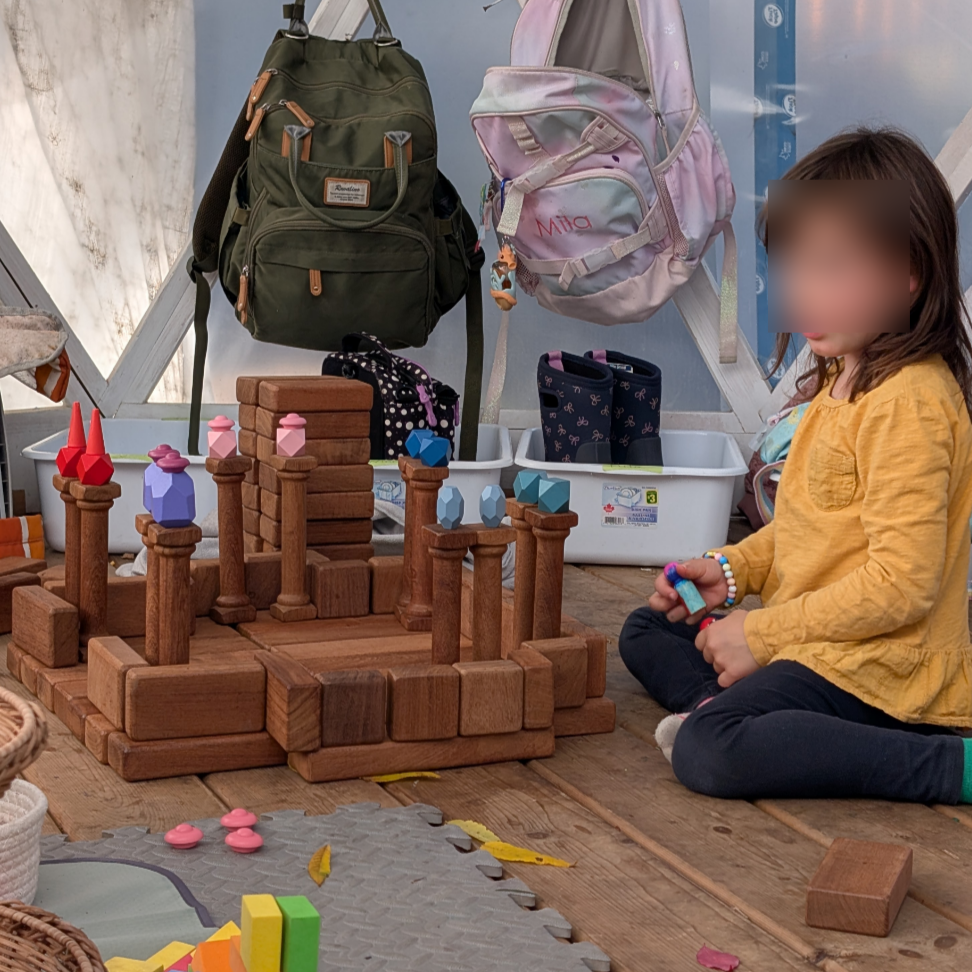
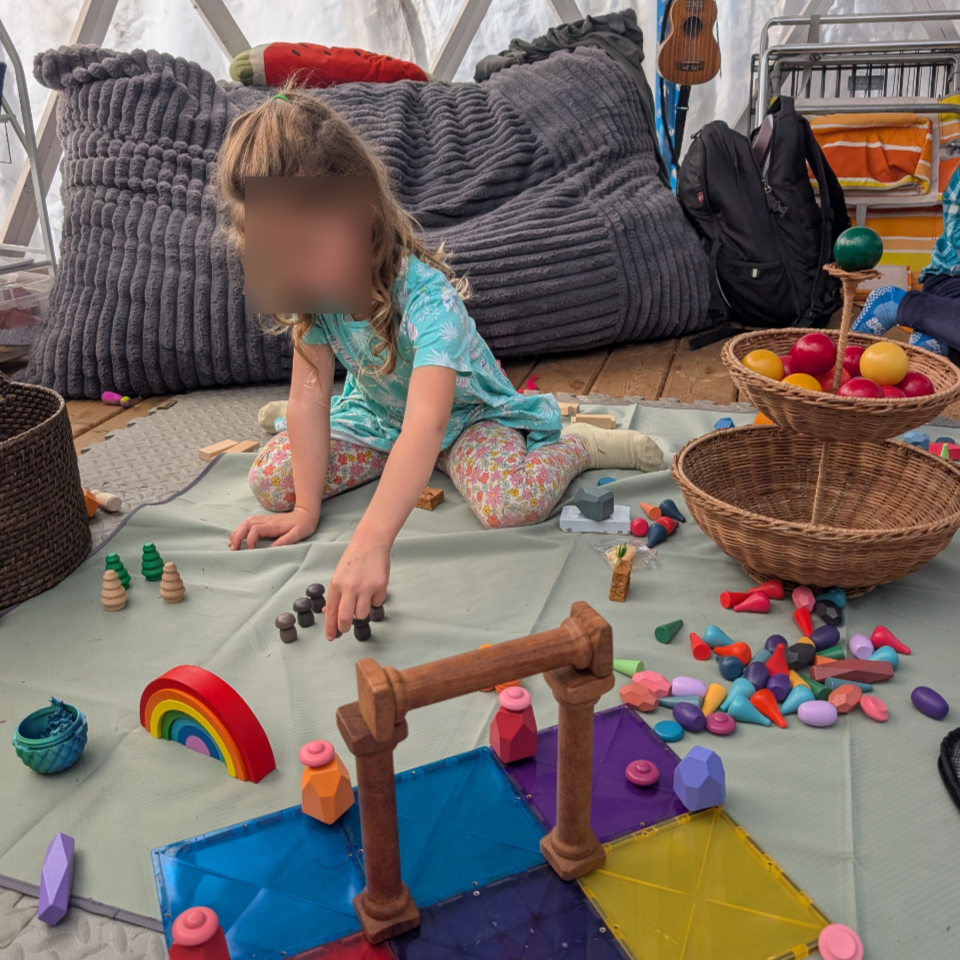
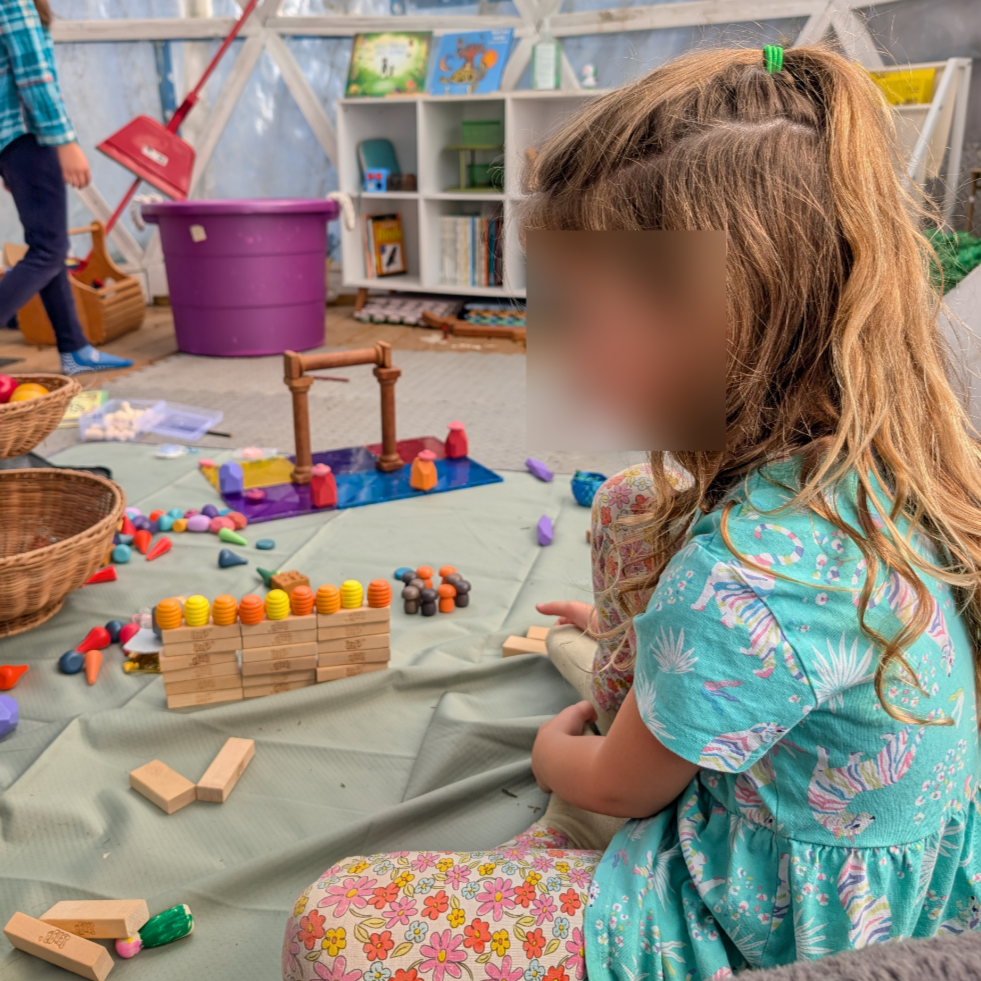
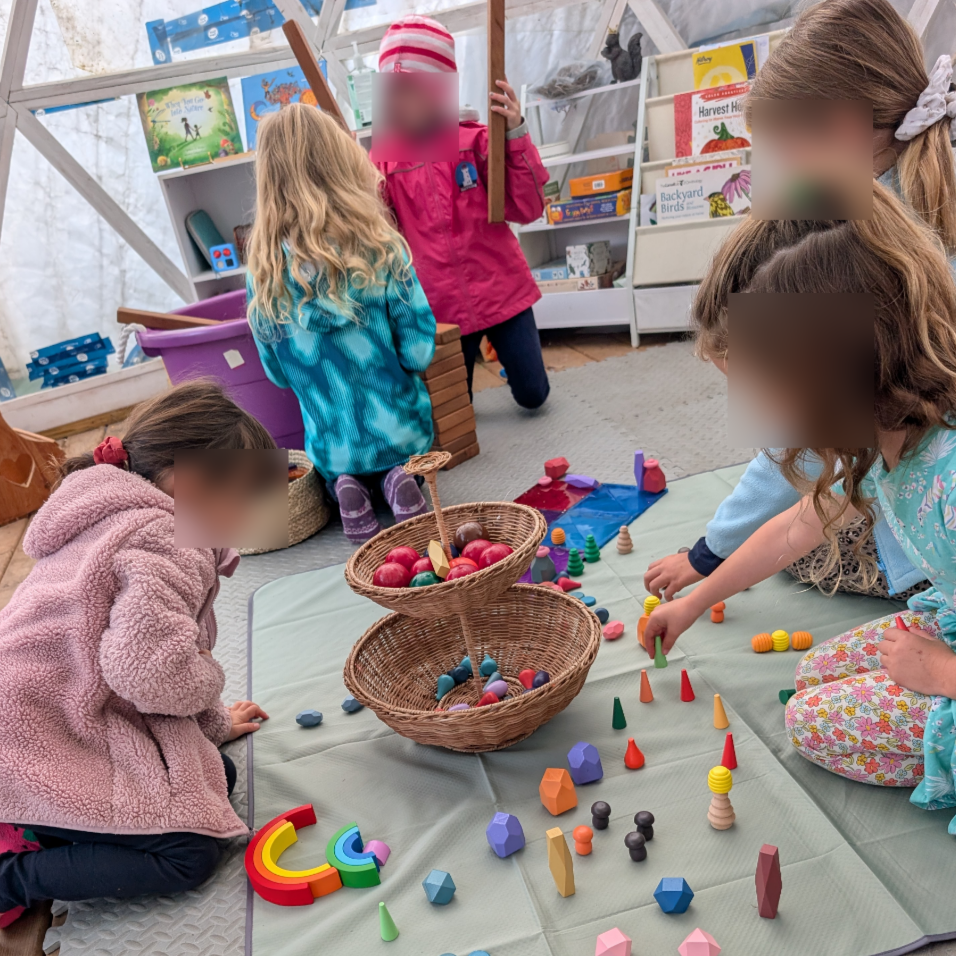
One group was constructing something with loose parts, carefully considering how to protect people from dangerous mushrooms. "There could be some guards to keep people out where there are poisonous mushrooms," one girl suggested.
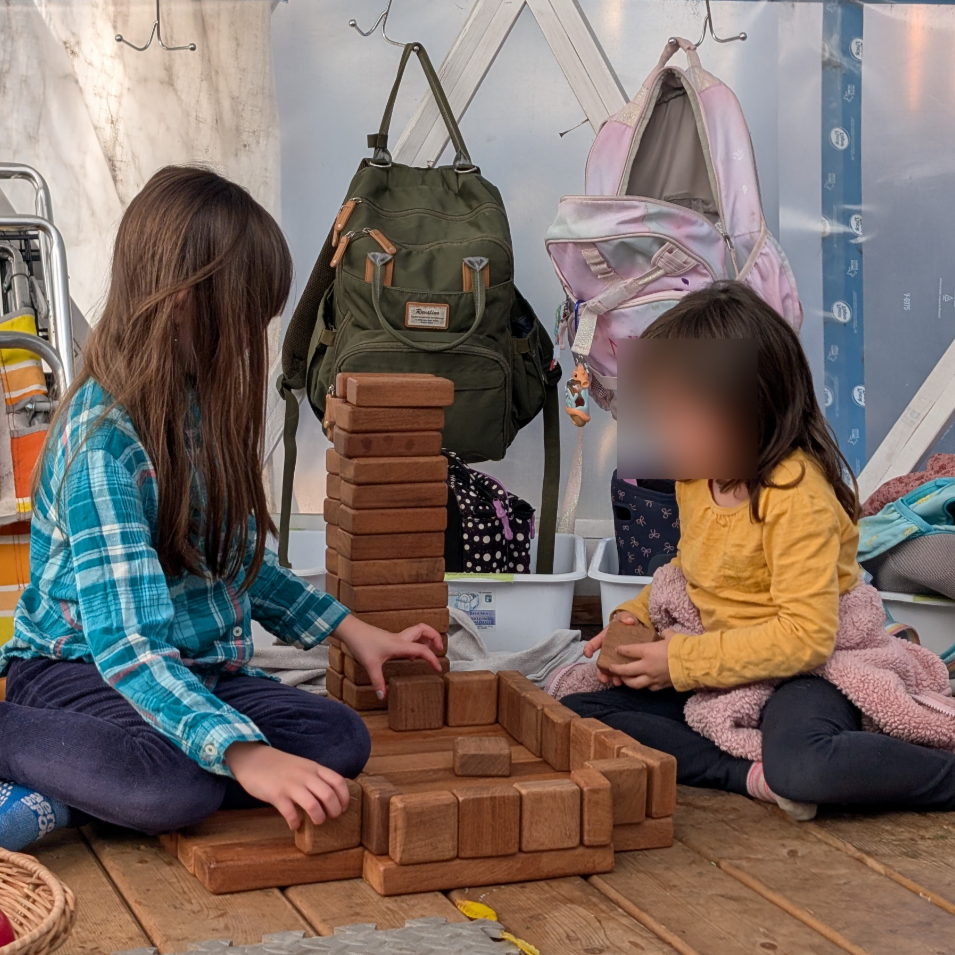
Nearby, two other girls were busy building with blocks. There was counting, planning, organizing, and negotiating as they worked out their design. At one point, one girl generously gave her friend one of her columns so they could each have six. A lovely little moment of cooperation and fairness that unfolded entirely on their own.
We also had some interesting conversations, including one girl sharing that a caterpillar had pooped on her last week, and that its poop was green! This led another girl to wonder, "Maybe all insects poop green." A question worth investigating!
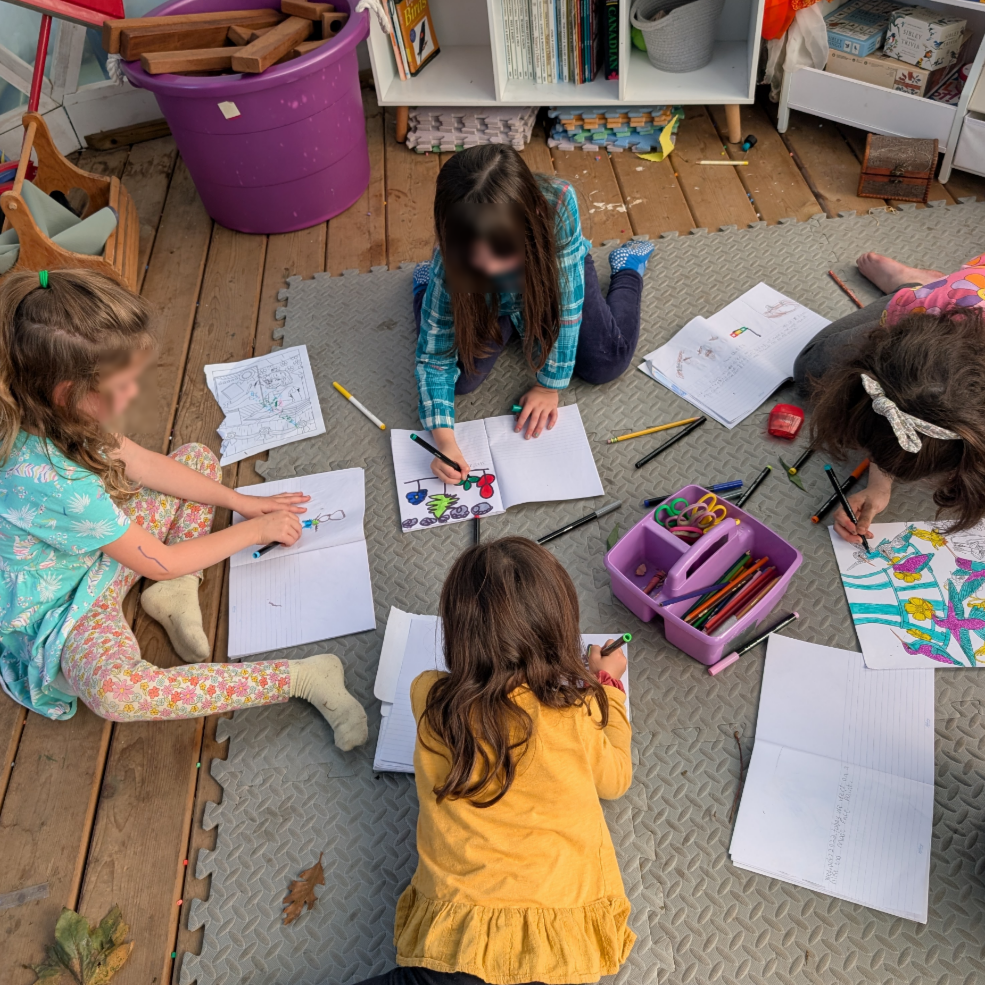
After some colouring, we headed off for another visit to the Blackfriars Community Gardens. Along the way, we spotted one cormorant in the river, rather than the three we'd seen on our last visit. The girls are becoming quite familiar with the wildlife along this stretch of the river, and it's interesting to see them noticing what changes from week to week.
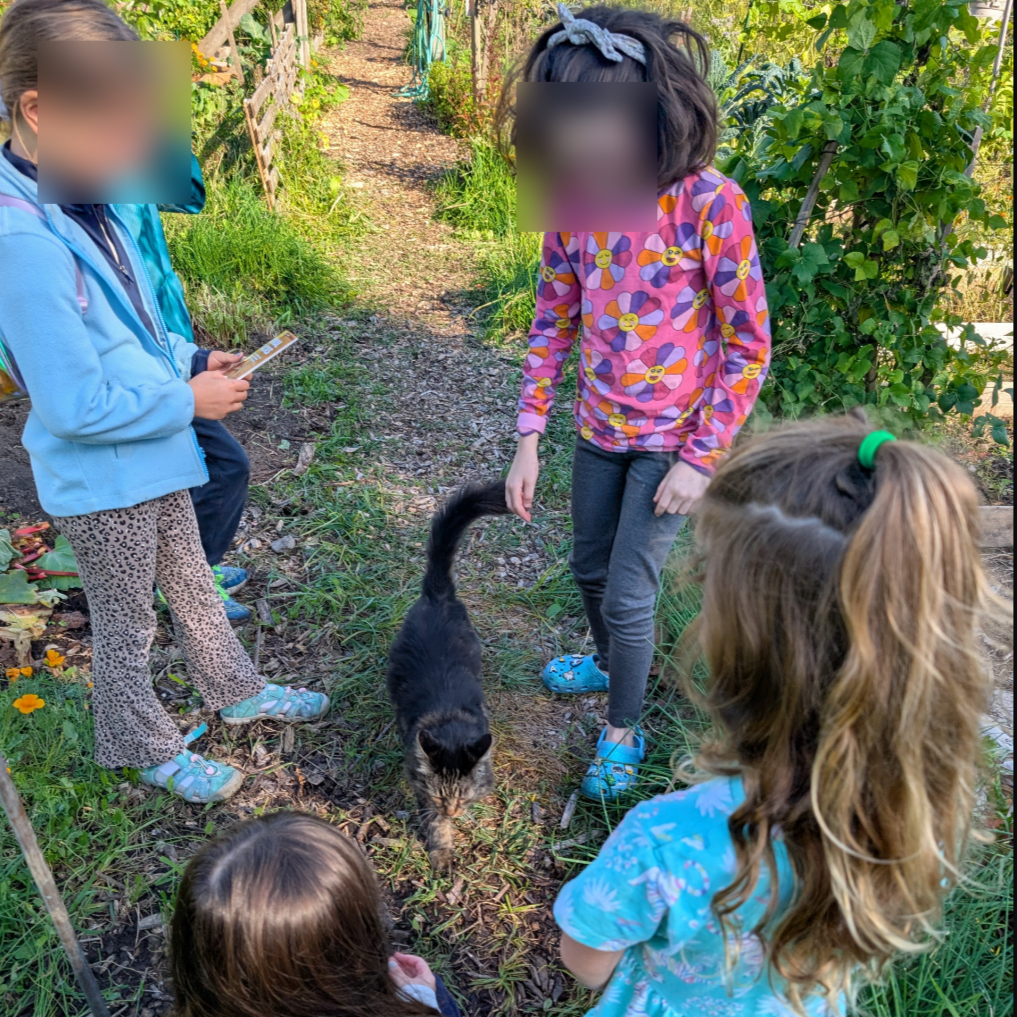
At the gardens, we met a friendly-looking cat, whom the girls approached respectfully to say hello. We also explored the garden's sharing box and Little Free Library, which sparked some thoughtful conversations about community, generosity, and taking only what we need.
We connected these ideas to the principles of the Honourable Harvest, which we've been learning about at Forest School. While we often talk about these principles in relation to harvesting plants and other gifts from the Land, they can guide how we interact with our community, too. What does it mean to take only what we need? How can we show gratitude? How do we make sure there's enough for others?
These are big ideas, but they're also things children can put into practice in small, everyday ways.
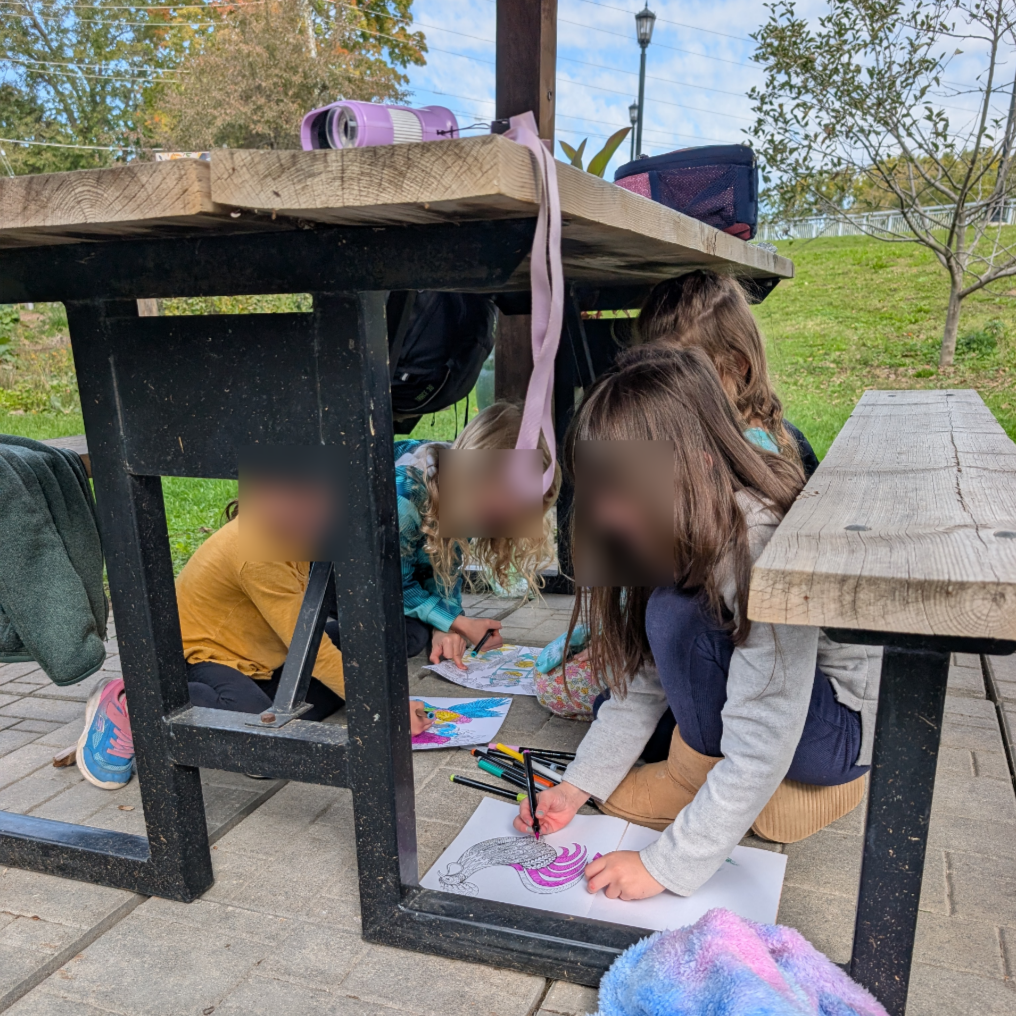
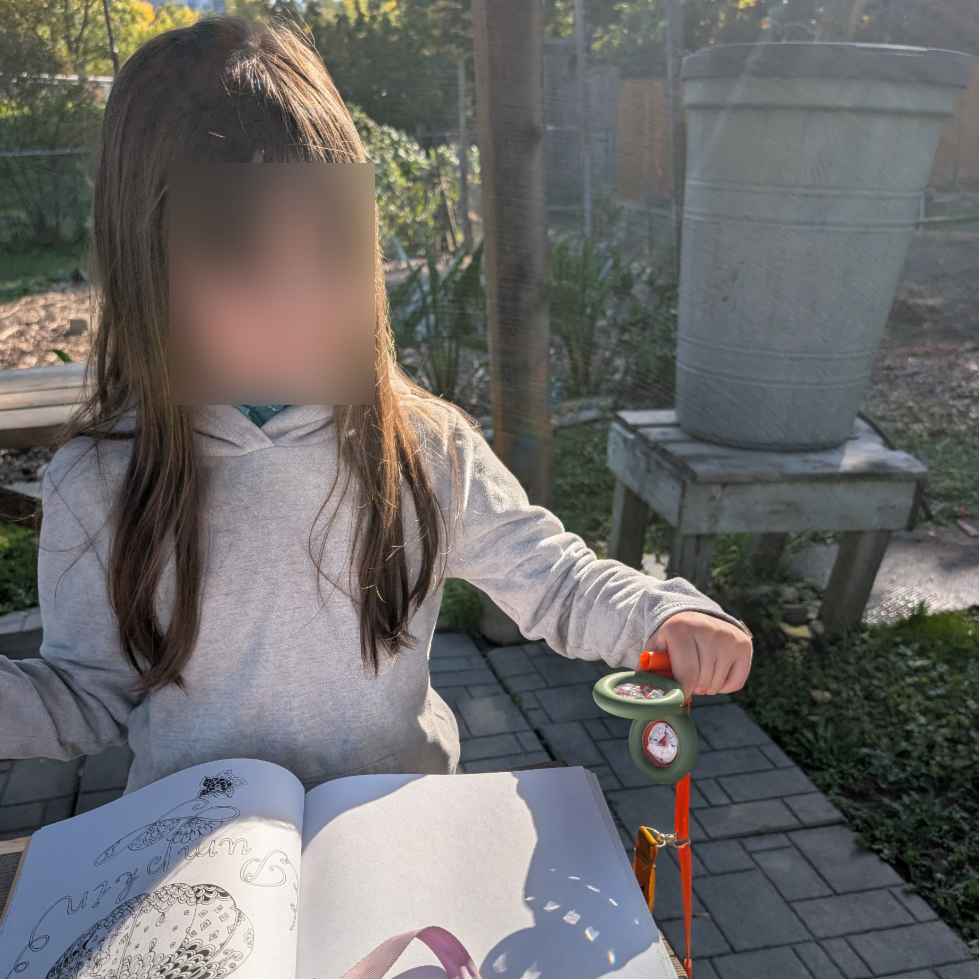
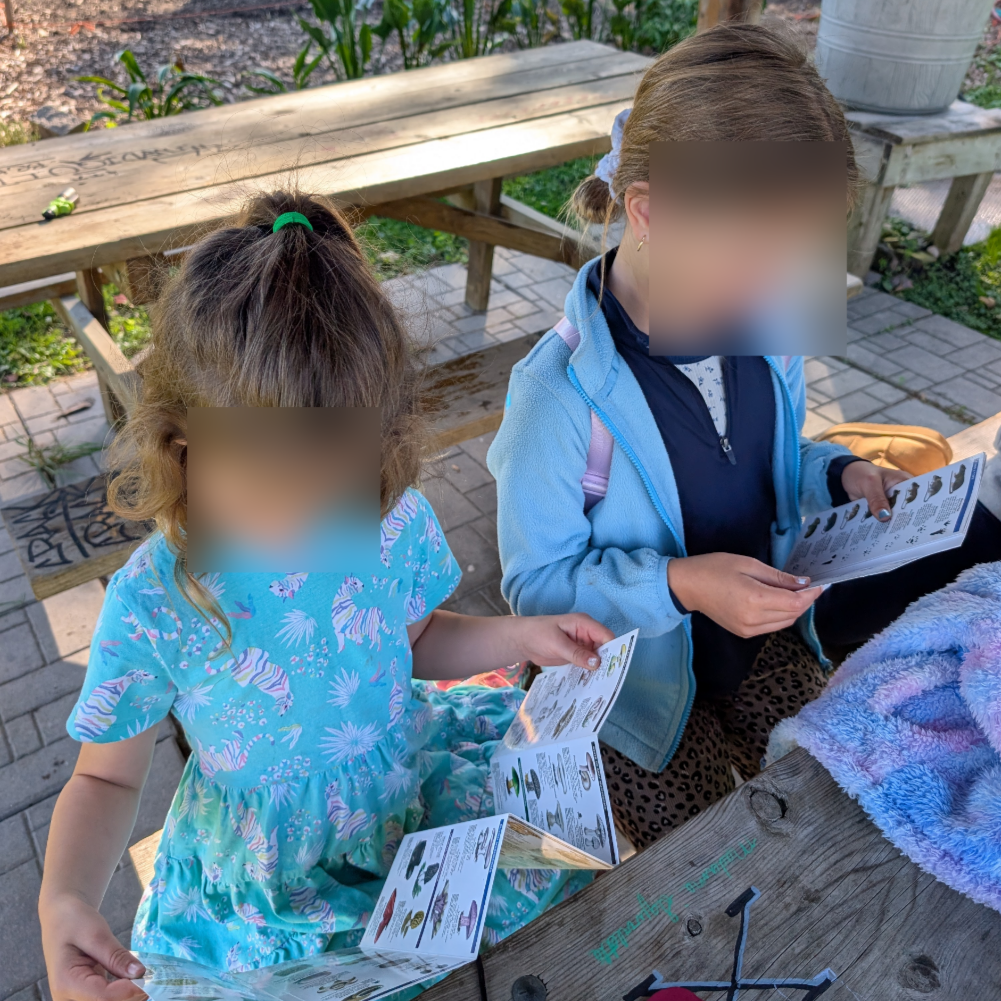
Once we settled in at the gazebo, out came the colouring supplies, field guides, and some interesting magnifying and prism-like tools that one of our Wildflowers had brought from home. The girls experimented with the sunlight shining through them, exploring the different effects they could create.
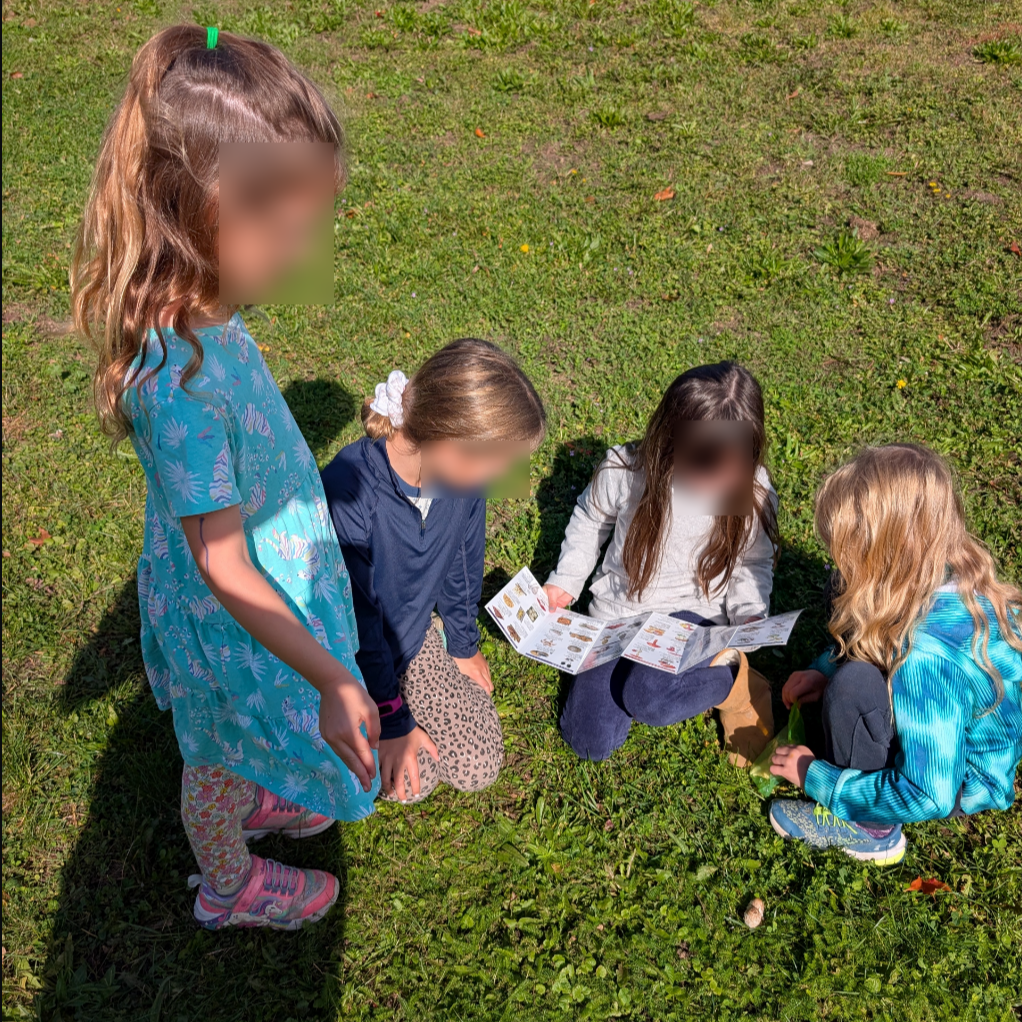
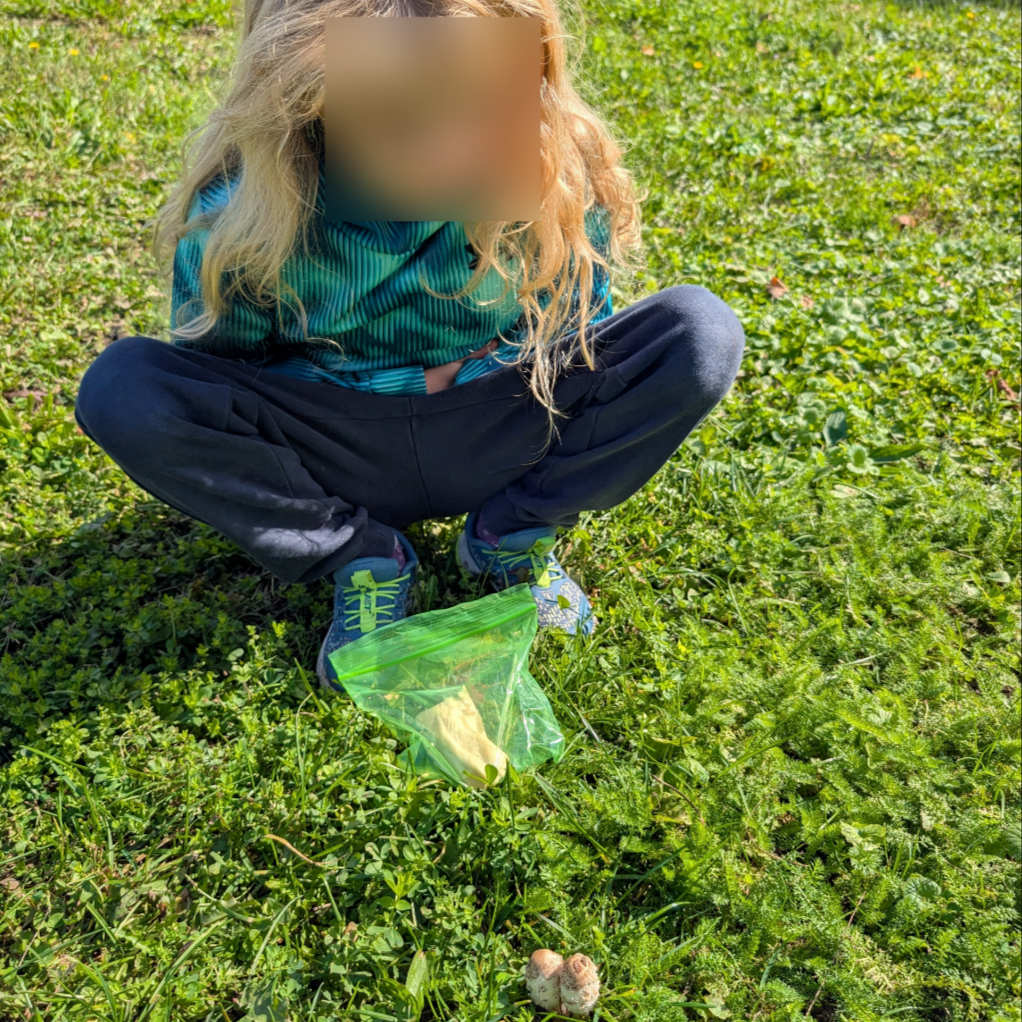
Our field guides came in handy when we discovered some unfamiliar mushrooms growing nearby, too!
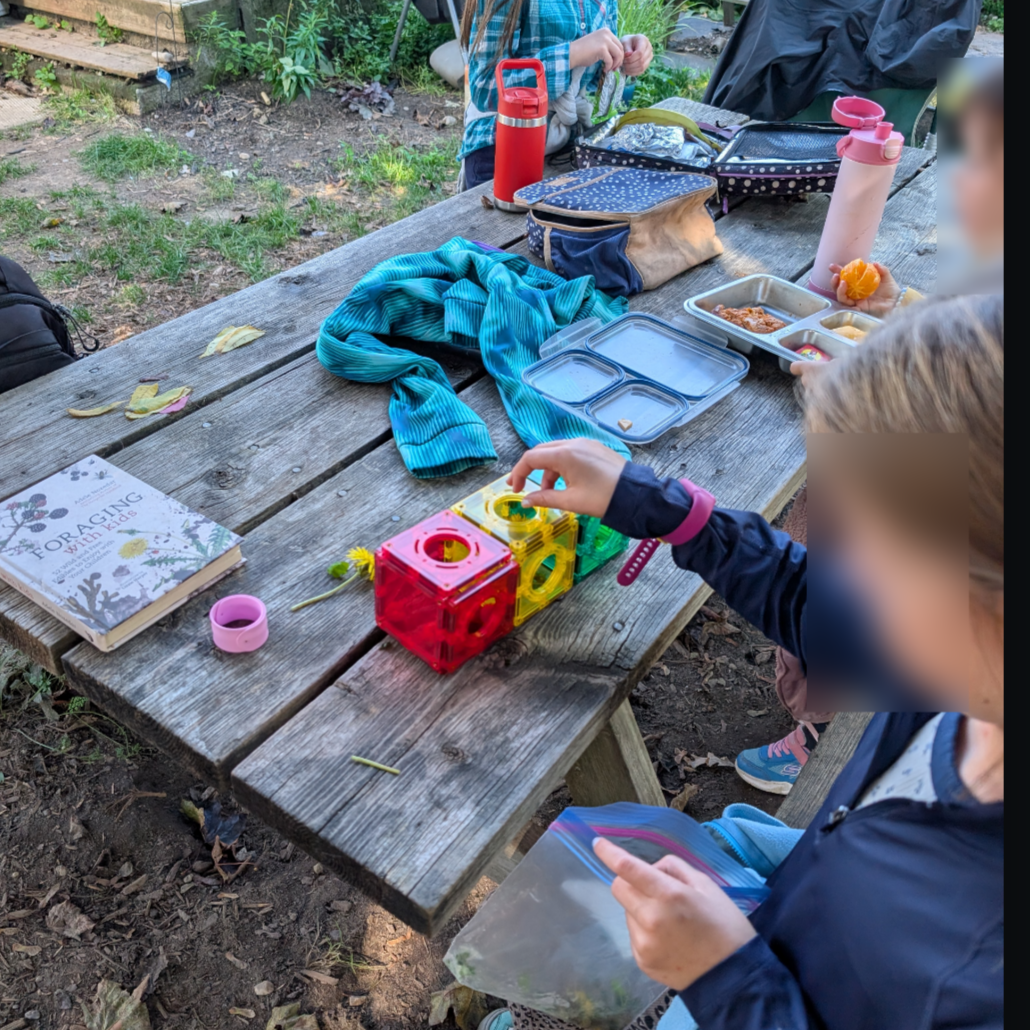
Unfortunately, the wasps are still hanging around, and they were particularly interested in joining us for lunch. Rather than spending our whole meal shooing them away, the girls came up with a plan. They decided to create a wasp trap, using some of their sweetest food to lure the wasps to a spot away from where we were eating.
I loved seeing them work together to come up with a solution to a problem they were experiencing. We've spent some time learning about wasps this fall, and it's been encouraging to see the girls thinking about ways to coexist with them.
One of my favourite moments of the day came from an activity that the girls invented entirely on their own.
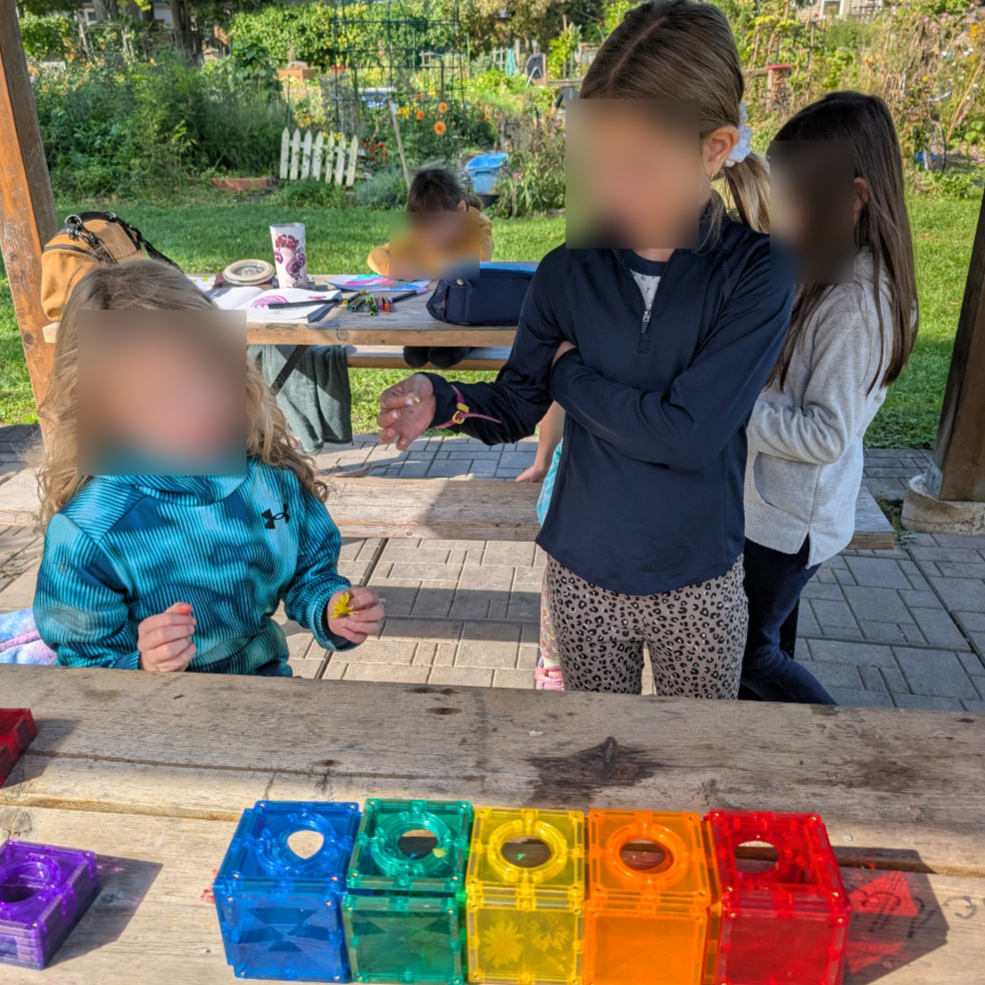
We'd brought some Magna-Tiles along, and one girl began arranging them into a colour-coded sorting system. Combined with our field guide to edible flowers and plants, this turned into a whole investigation! The girls searched the garden for plants pictured in the guide, then sorted their discoveries into the corresponding coloured sections.
There was plenty of discussion and reasoning along the way. At one point, they debated whether they'd be able to find a particular plant pictured in the book. After some consideration, they concluded that they probably wouldn't, because it was a desert plant, and we certainly weren't in a desert!
What began as simply building with Magna-Tiles had turned into an opportunity to explore plants, habitats, classification, and geography. No instructions or planned activity required. Just some interesting materials, a beautiful place to explore, and curious minds.
On our walk back, we spotted that enormous fish in the river again! One of the girls decided he needed a name, and so he became Shadow. I wonder how many more times we'll see him before the season changes.
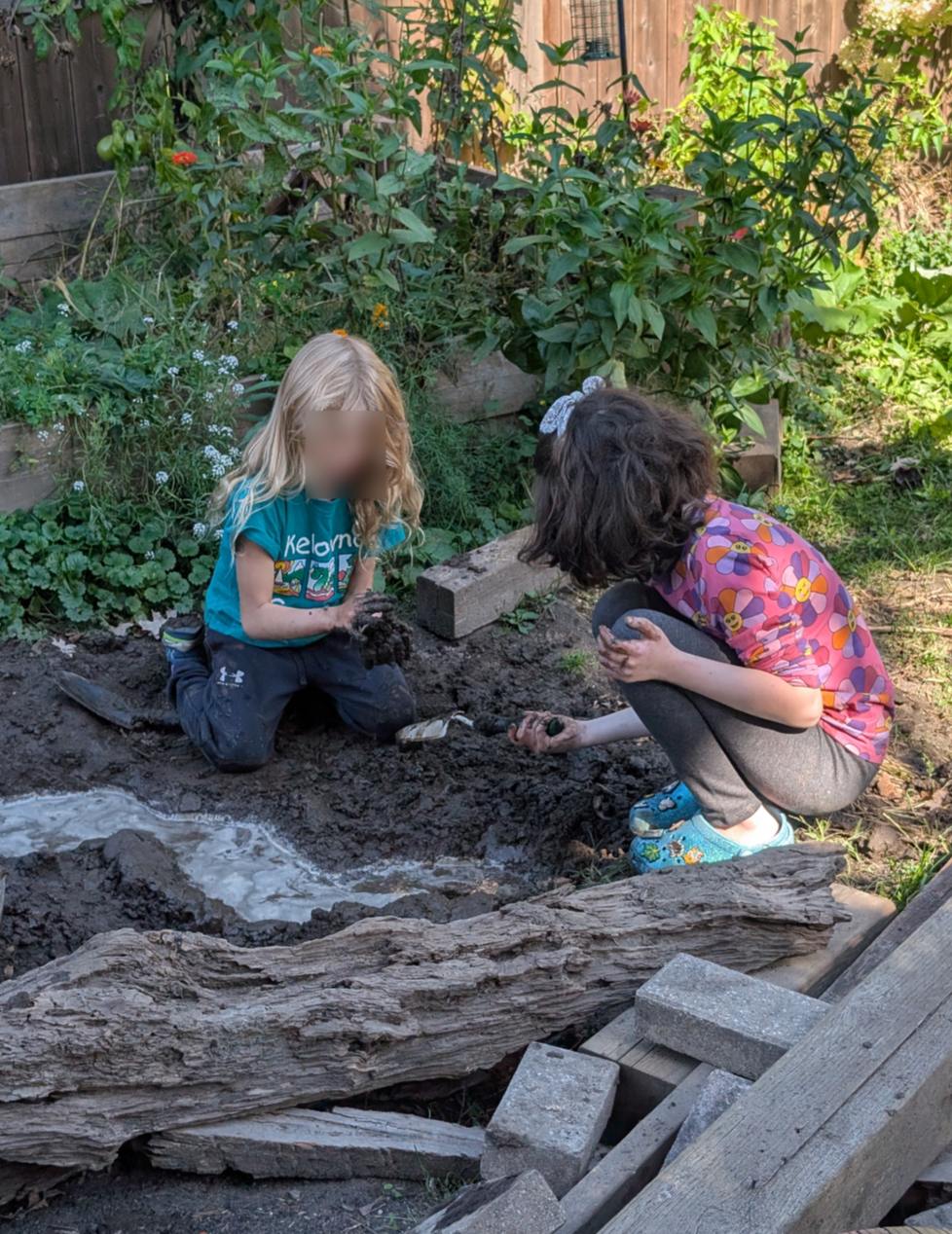
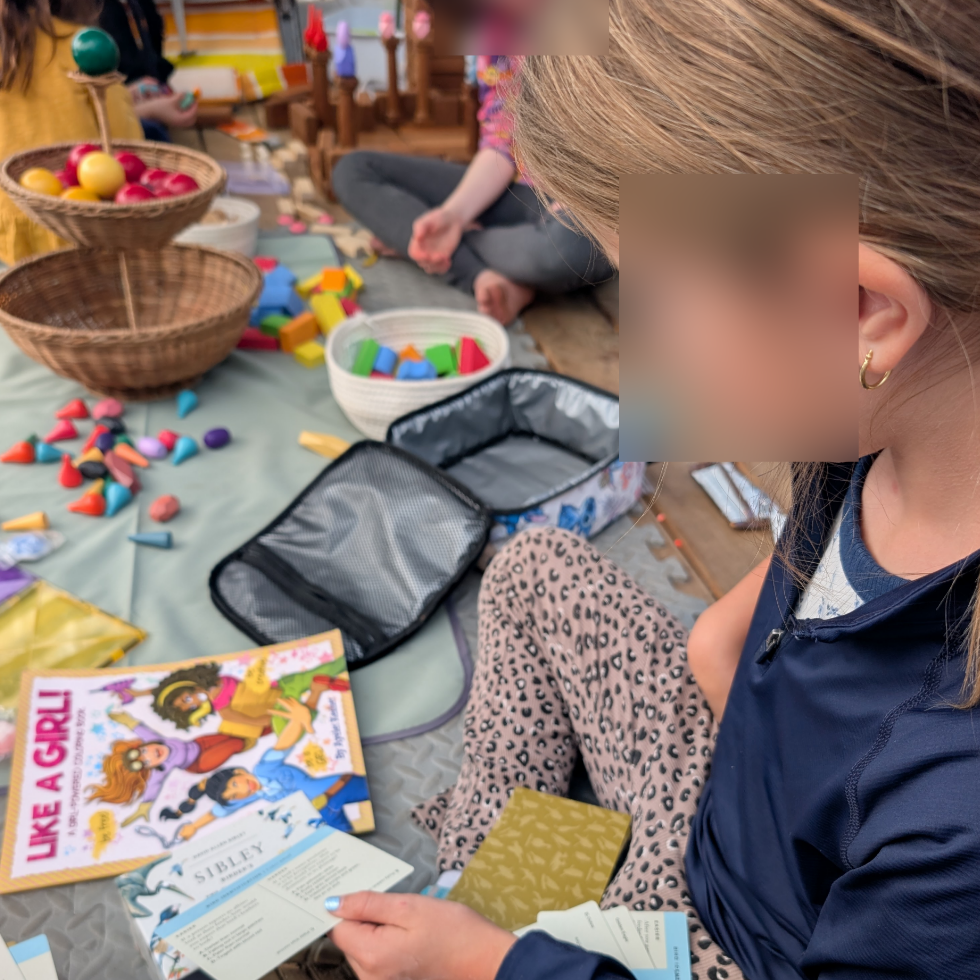
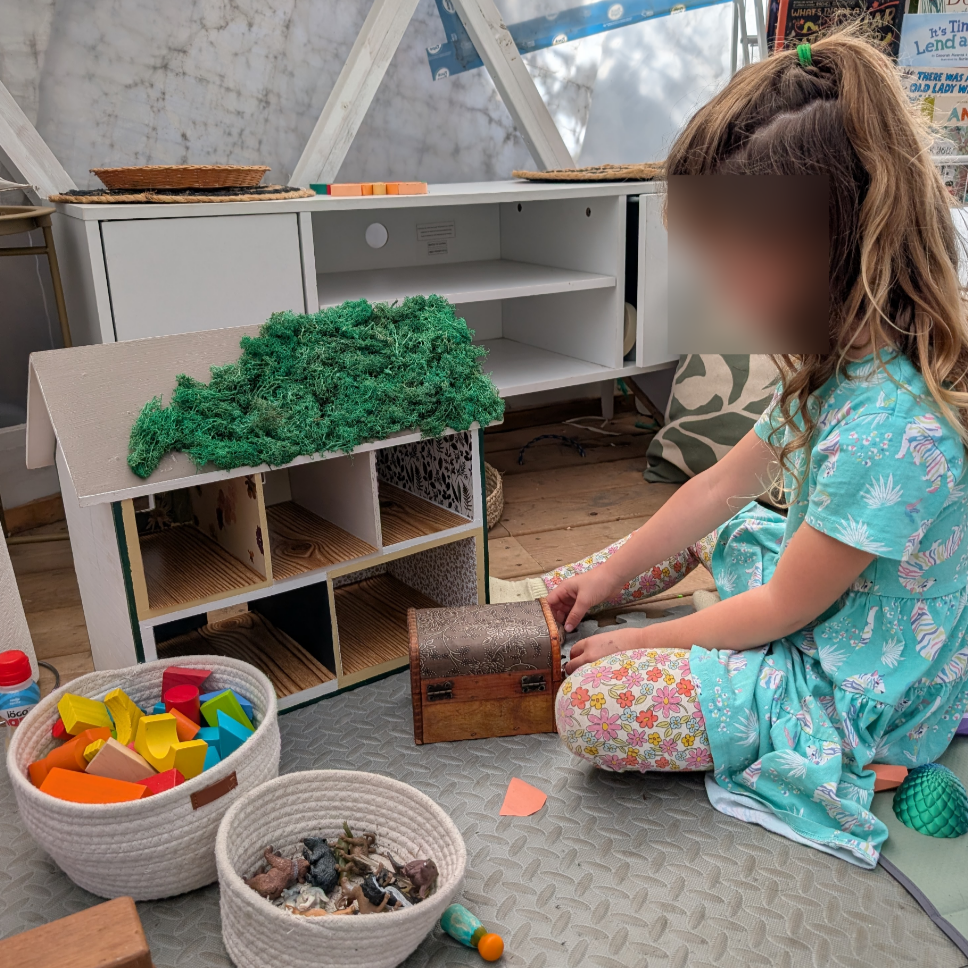
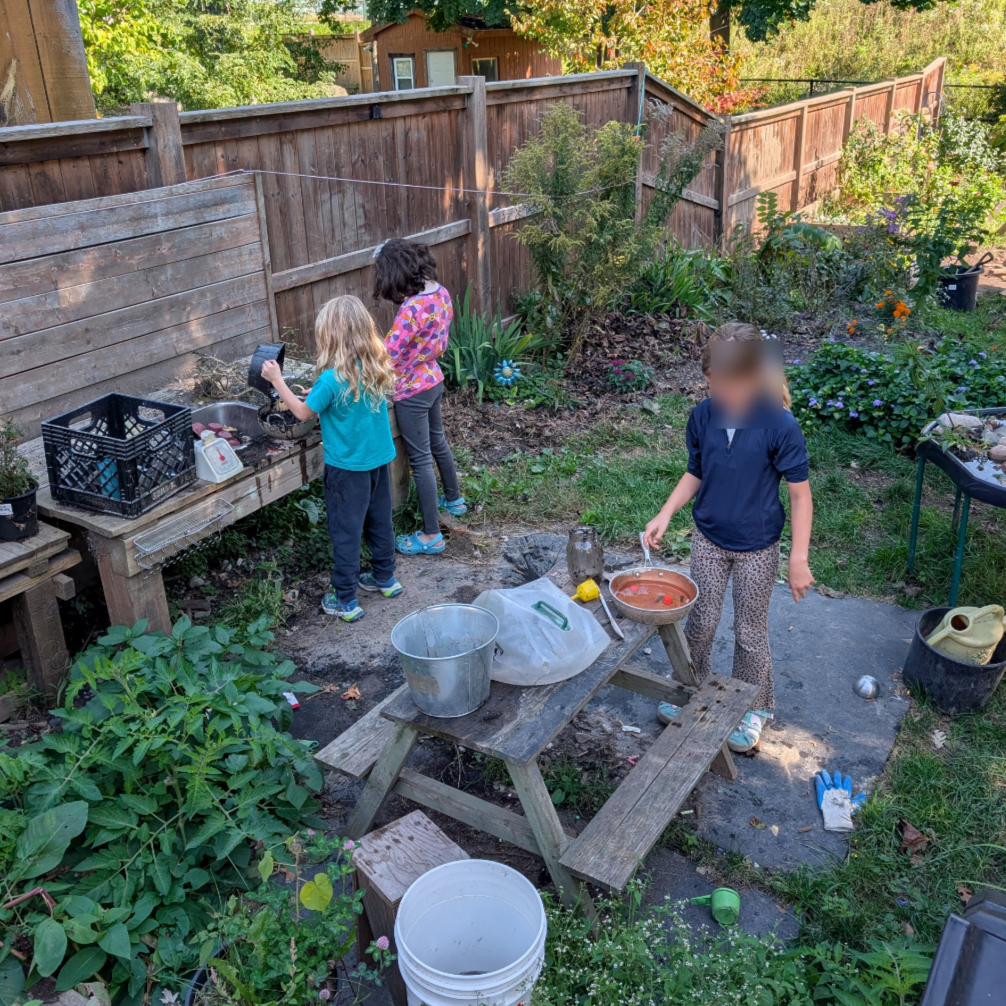
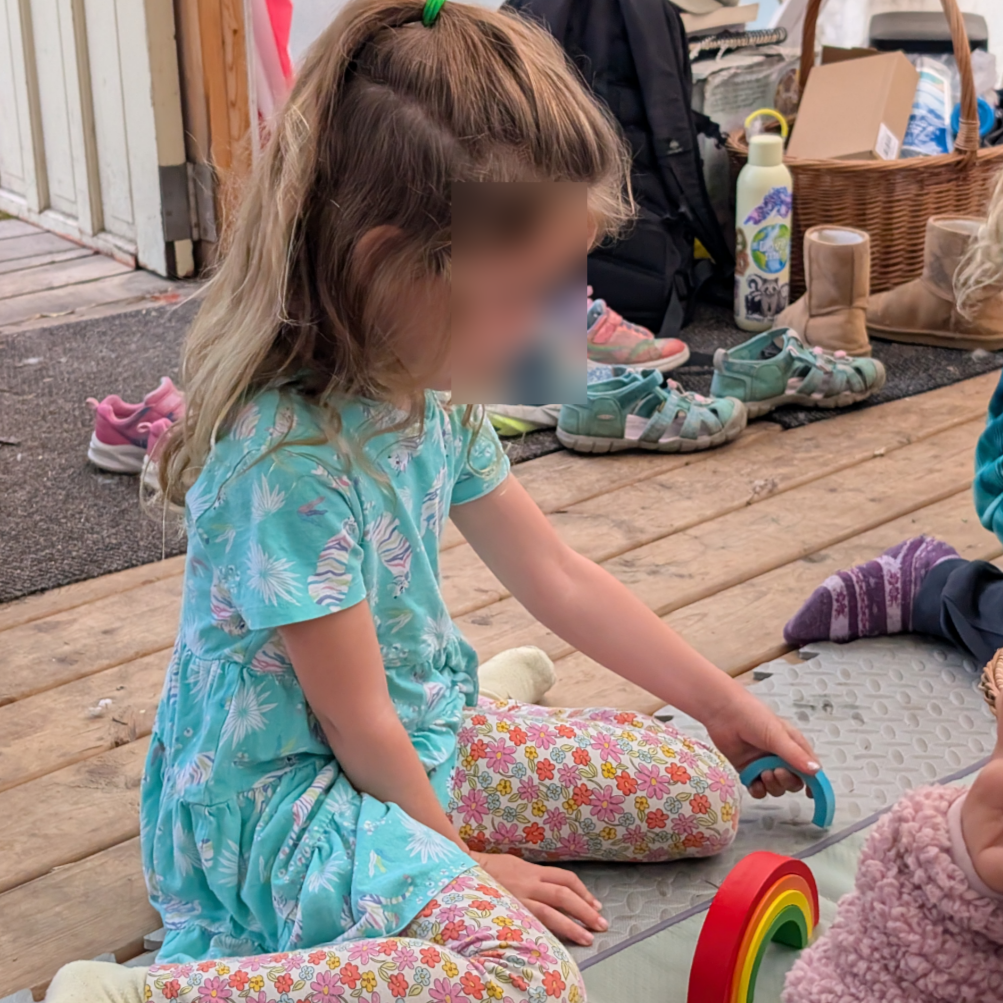
Back at Heron Tree Estates, the girls spread out into their favourite activities. Some got busy in the mud kitchen, while others headed into the dome to create elaborate playscapes with loose parts. We also enjoyed some Sibley Bird Trivia together, and a few Wildflowers managed to get themselves thoroughly muddy in the dig pit!
We finished our day with nature journals, giving everyone a chance to record a little something from their time outdoors.
It was another wonderful day of watching the girls take their own ideas and run with them. From negotiating building materials to designing wasp solutions and inventing plant identification games, there was so much thoughtful collaboration happening in between all the playing, exploring, and silliness.
Thanks for a great day, Wildflowers!